Building Architex: A Project Management Platform for Architects
Building Architex: A Project Management Platform for Architects
Architex is a project management platform I built specifically for architecture practices. The idea came from a real-world problem I witnessed firsthand.
I was working with my long-time friend Tauseef, who is an architect, and I saw how he was struggling to find the latest file for a client. He had multiple versions of drawings, specifications, and documents scattered across different folders, and it was taking him way too long to locate the most recent version. That's when we sat down together and designed the workflow that would become Architex.
The Problem
Traditional project management tools don't understand the architectural workflow. Architects like Tauseef need:
- Stage-based project tracking (Intro → Analysis → Design → Complete)
- Intelligent document version control for drawings and specifications
- Site visit documentation with photos
- Payment milestone tracking linked to project stages
- An AI assistant that understands architectural context
The Solution
I designed Architex around how architecture practices actually operate. The platform combines:
Stage-Based Workflows
Projects move through natural stages from initial brief to construction documentation. Each stage has customizable checklists and deliverables.
Document Control
Automatic revision numbering, full document history, and version comparison for PDFs, DWG files, and images.
Site Visits & Billing
Document every site visit with photos and notes. Link visits to billing milestones to keep invoicing aligned with progress.
AI Assistant
An intelligent assistant that understands architectural terminology and can answer questions about project status, find documents, and provide deadline alerts.
Designing the Workflow
After identifying the problem, Tauseef and I spent time mapping out the actual workflow that architects follow. We sketched out the stages, document management needs, and how site visits connect to billing. This collaborative design process ensured that Architex would solve real problems, not theoretical ones.
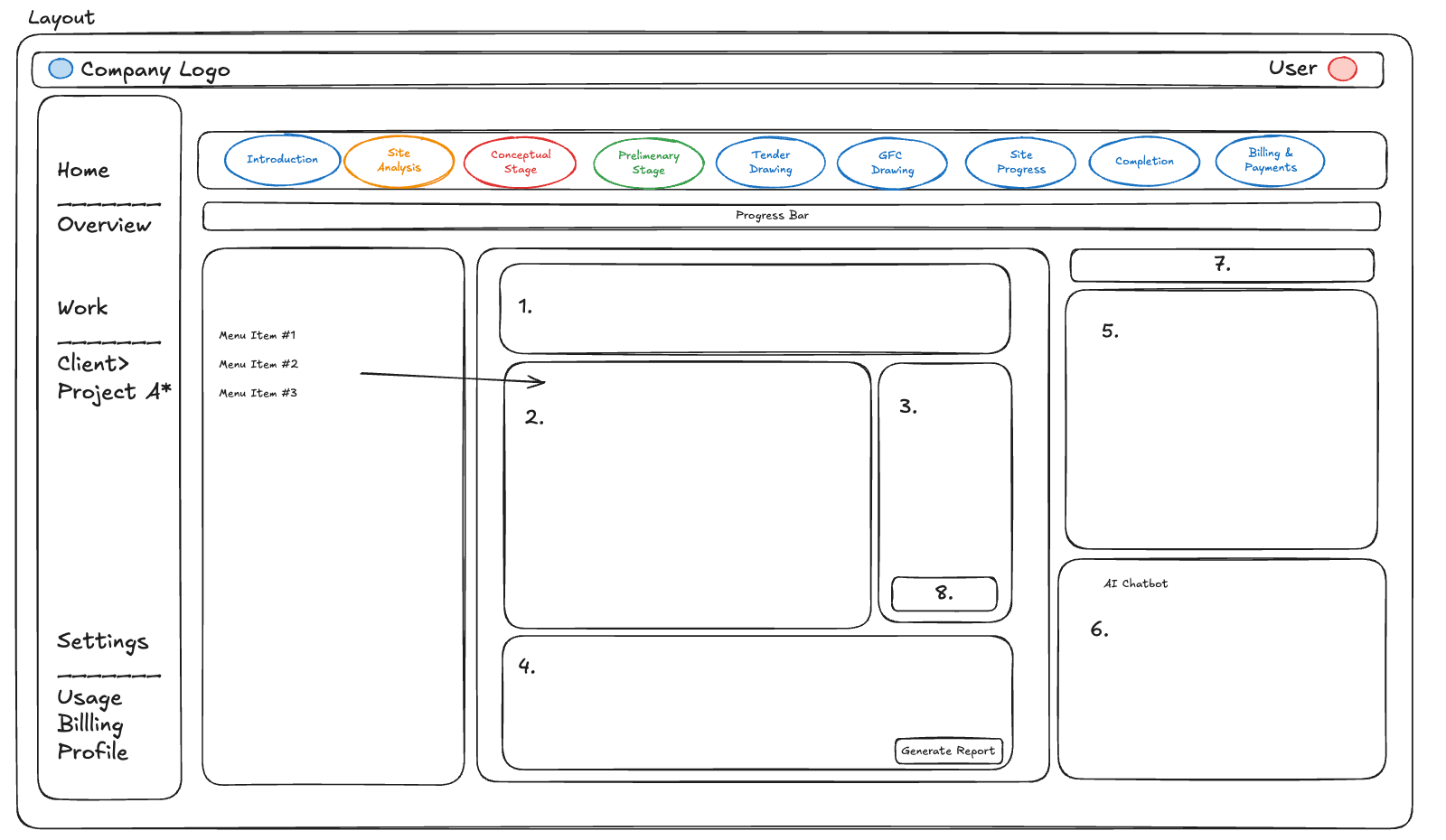
Architex Design Process
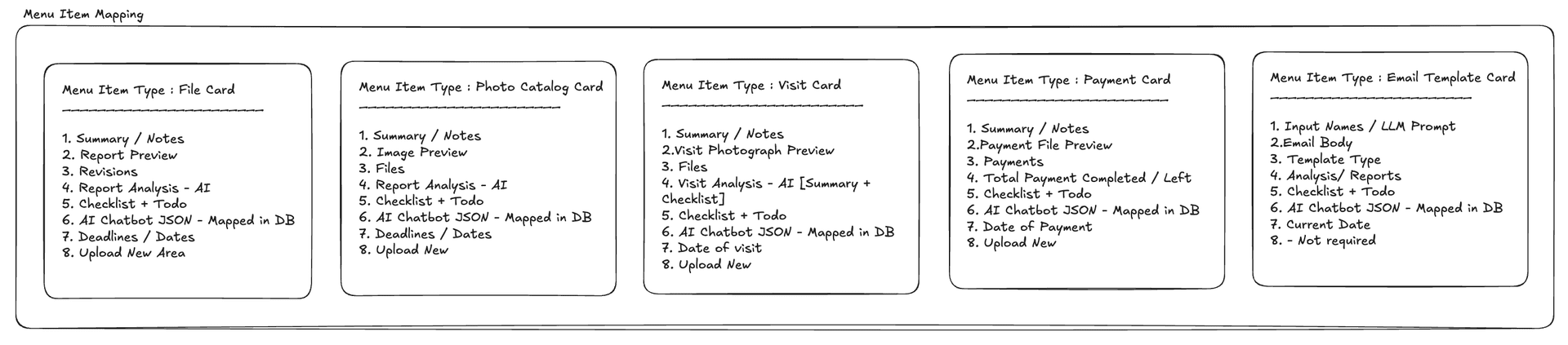
Architex Design 2
Technical Implementation
Built with Next.js, TypeScript, React, and Tailwind CSS. The AI assistant uses advanced language models to understand project context and provide meaningful insights.
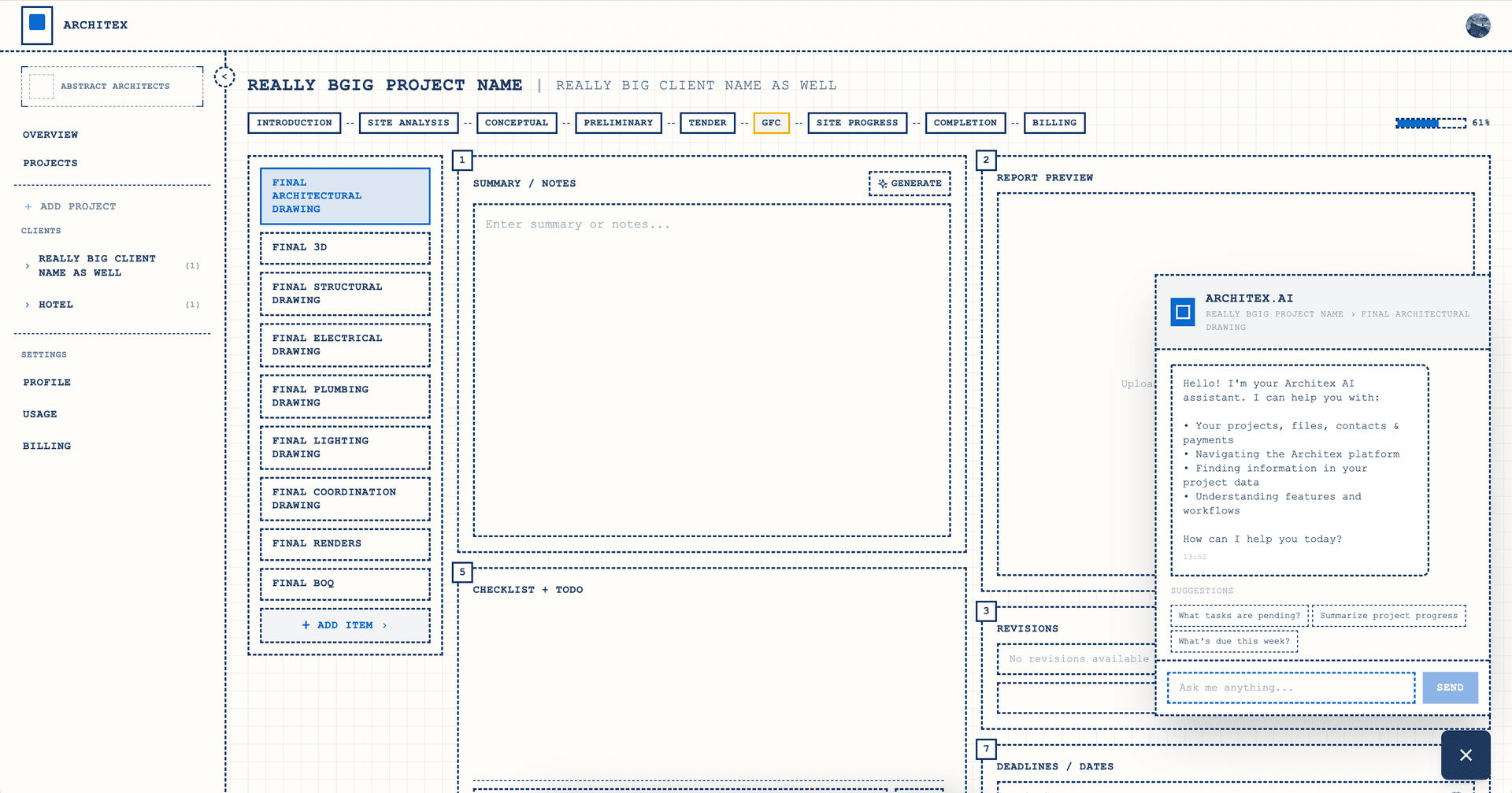
Current Architex Website
User Testing & Iteration
Currently, Tauseef is actively testing Architex in his daily workflow. This real-world testing is invaluable—he's using it with actual projects, real clients, and genuine deadlines. Every week, we sit down to discuss what's working, what's not, and what features would make his life easier.
Based on his user experience, we're continuously iterating on:
- The document version control system
- The stage-based workflow customization
- The AI assistant's understanding of architectural terminology
- The site visit documentation process
This iterative approach, driven by real user feedback, ensures that Architex evolves into a tool that truly serves architects' needs rather than forcing them to adapt to a generic solution.
Lessons Learned
Building Architex taught me the importance of:
- Understanding your users' actual workflows through direct observation
- Collaborating with domain experts (like Tauseef) from the start
- Designing for domain-specific needs rather than generic solutions
- Creating intuitive interfaces for complex data
- Integrating AI in a way that adds real value
- Iterating based on real-world usage, not assumptions
The platform is currently in active development and testing. With Tauseef's ongoing feedback, we're building something that will genuinely help architects manage their practices more efficiently.